
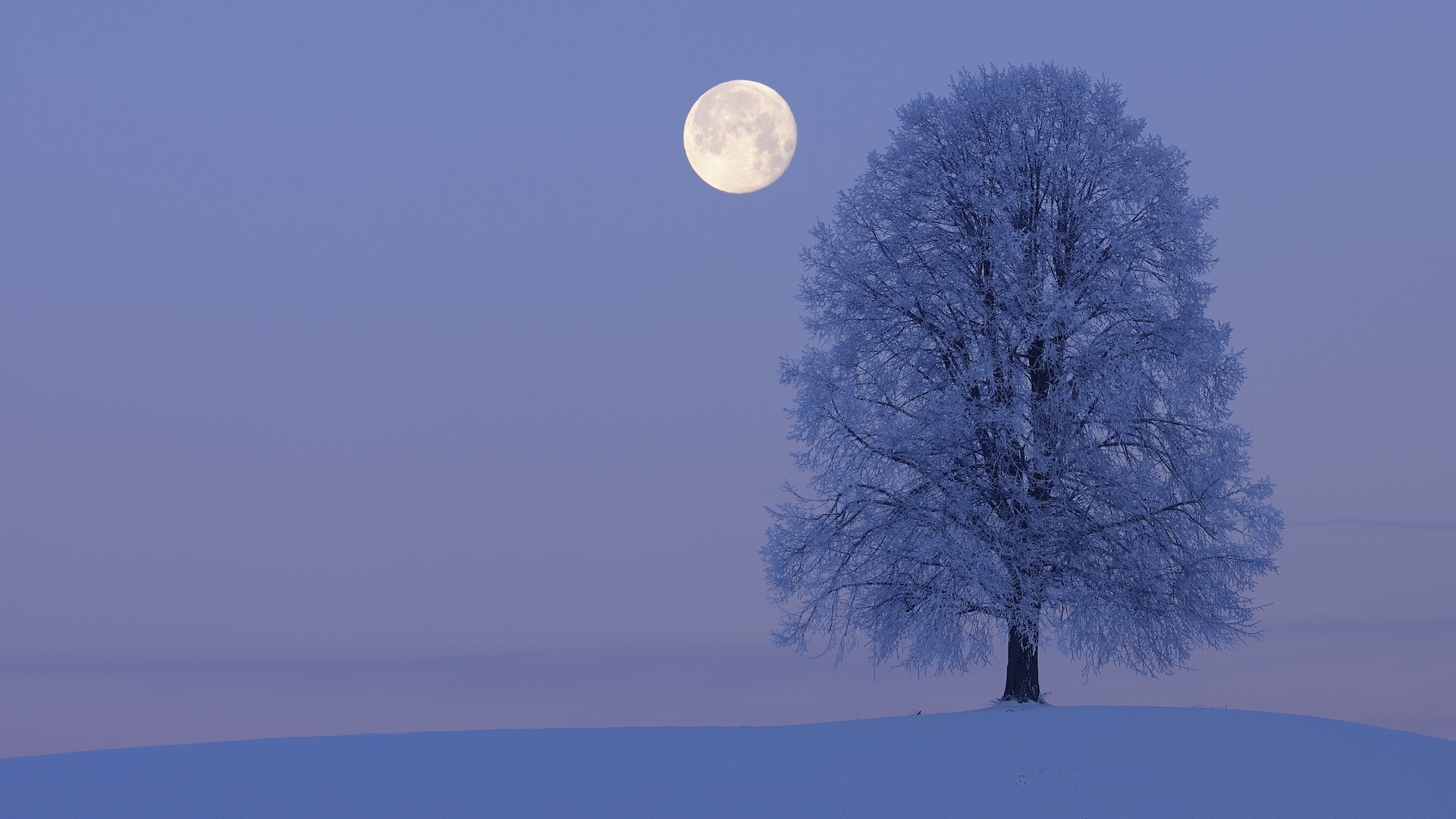
As the final full moon of both 2024 and fall, the rise of the Cold Moon will provide a spectacular, if frosty, finale to the celestial calendar.
Officially full at 4:01 a.m. EST on Sunday (Dec. 15), the full moon will be best seen rising in the east later that day at the time of moonrise where you are. It will be in the constellation Taurus, surrounded by some of the night sky's brightest stars and the planet Jupiter.
Although it can easily be seen with the naked eye, a pair of binoculars or a small beginners' telescope will give you a terrific close-up of the orangey lunar surface as it appears above the eastern horizon.
The Cold Moon is so named because it rises just a week before the December solstice, the longest night of the year in the Northern Hemisphere, which signals the beginning of astronomical winter. It's also known as the Long Nights Moon and the Moon Before Yule, referring to a Pagan festival coinciding with the solstice.
While the name Cold Moon comes from Mohawk culture, according to the Old Farmer's Almanac, other Native American names include Drift Clearing Moon, Hoar Frost Moon, Snow Moon and Winter Maker Moon. According to Timeanddate, the Cold Moon and Oak Moon are also names from Celtic culture that refer to December's full moon.
Since the moon will be opposite the sun, the moon will mirror the sun's movements. When the sun is at its lowest point in the daytime southern sky, as seen from the Northern Hemisphere, the Cold Moon will be at its highest.
On the night of the full moon, our natural satellite will shine below Capella in the constellation Auriga and above Betelgeuse in the constellation Orion, with Jupiter to its right. The largest planet will be clearly visible all month long in the night sky.
The Cold Moon also rises near the peak of the Geminid meteor shower, one of the year’s most prolific displays of “shooting stars.” Unfortunately, the bright moon’s glare will make it harder to spot as many meteors as usual.
The next full moon after the Cold Moon will be the Wolf Moon, which will turn full on Jan. 13, 2025.