
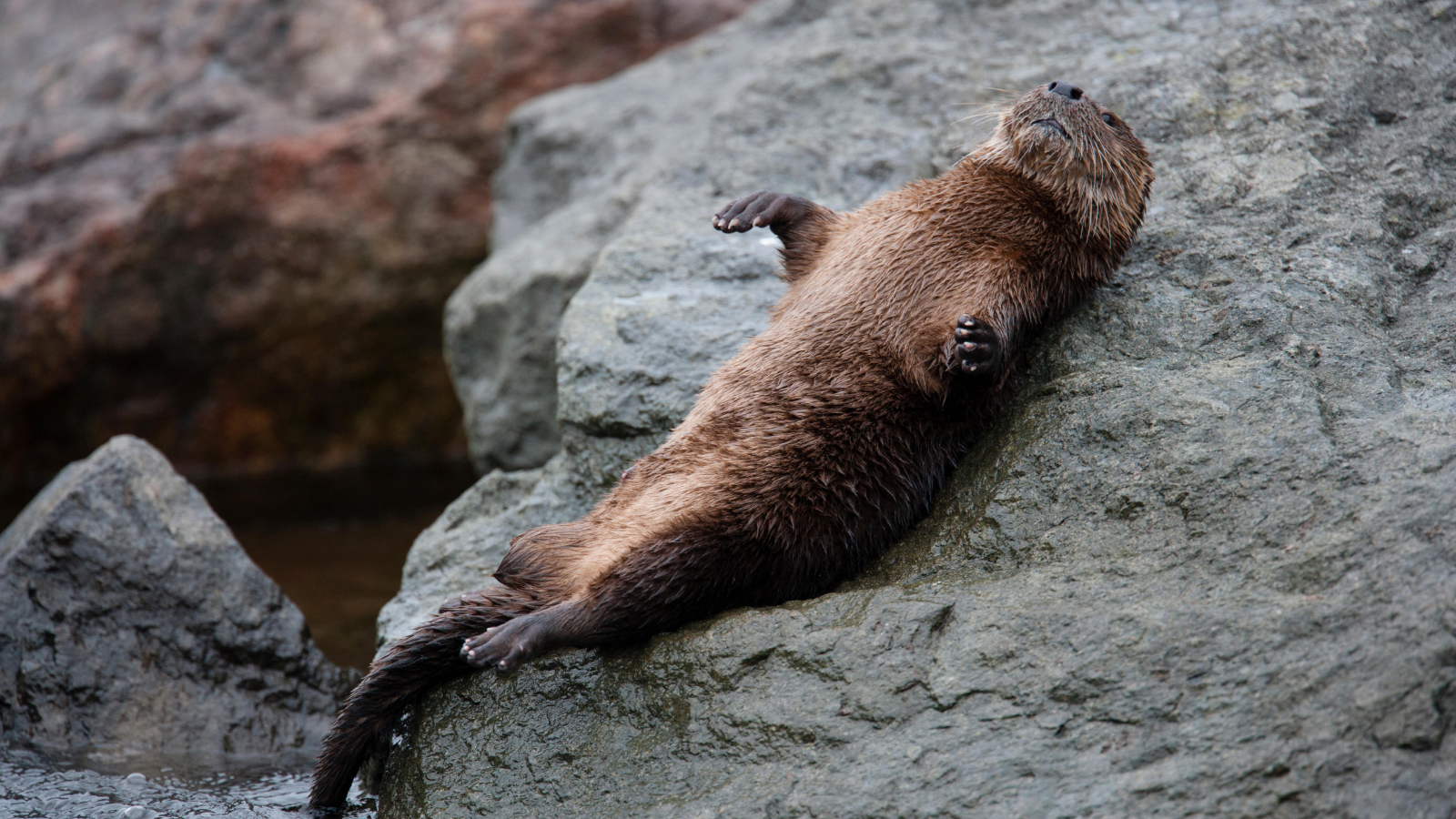

Name: Chungungo, or marine otter (Lontra felina)
Where it lives: Rocky marine coastline from northern Peru to the islands of Cape Horn in Chile, and Isla de los Estados in Argentina
What it eats: Crustaceans, mollusks, fish, and occasionally birds and small mammals
Why it's awesome: Meet the chungungo — also known as the marine otter and sea cat — the smallest sea otter in the world.
The chungungo rarely grows beyond 45 inches (114 centimeters) in length and weighs just 6.6 to 11 pounds (3 to 5 kilograms). Its elongated body and small, flattened head give it a streamlined silhouette for swimming. But despite being well-adapted to the water, the chungungo only spends about 20% of each day in the water because of the frigid temperatures.
Unlike river otters, marine otters aren't great at regulating their body temperature. To retain heat they have to boost their metabolism, which requires them eating huge quantities of food — up to a third of their body weight each day. They also spend a lot of time lying on their backs, soaking up the sun, and diligently groom their coats to maintain their insulating properties.
Their highly vascularized feet also allow them to regulate their body temperature — spreading their toes helps cool them down, while closing them up conserves warmth.
The chungungo's short limbs are equipped with strong claws and webbed toes, ideal for catching prey. They use their tails and hind limbs to propel themselves through the water and are often found swimming on their backs. This position allows them to hold prey against its chest and manipulate it with its rear limbs.
Related: Lion-size otters prowled Ethiopia 3 million years ago
Chungungo fur, once heavily coveted by the fur trade, is dark brown on the back and yellowish on the belly. Beneath the outer coat lies a dense layer of fine hairs that insulate it from the cold and protect it from injury against the rocky coast. Marine otters live in extreme conditions — the rocky coasts they inhabit experience extreme swells and strong winds, while the cliffs are often steep, with their dens built into crevices and caves.
Chungungo pups are known for their curiosity and playfulness. During their breeding season (December to January), adults select a mate and remain together for life. In these monogamous partnerships, both parents share the responsibility of bringing prey back to the den to nourish their offspring.
Females give birth to one to three pups, which stay with their mothers for 8 to 12 months. Then, they separate from their parents and lead a solitary life, until they form a pair during the reproductive season.