
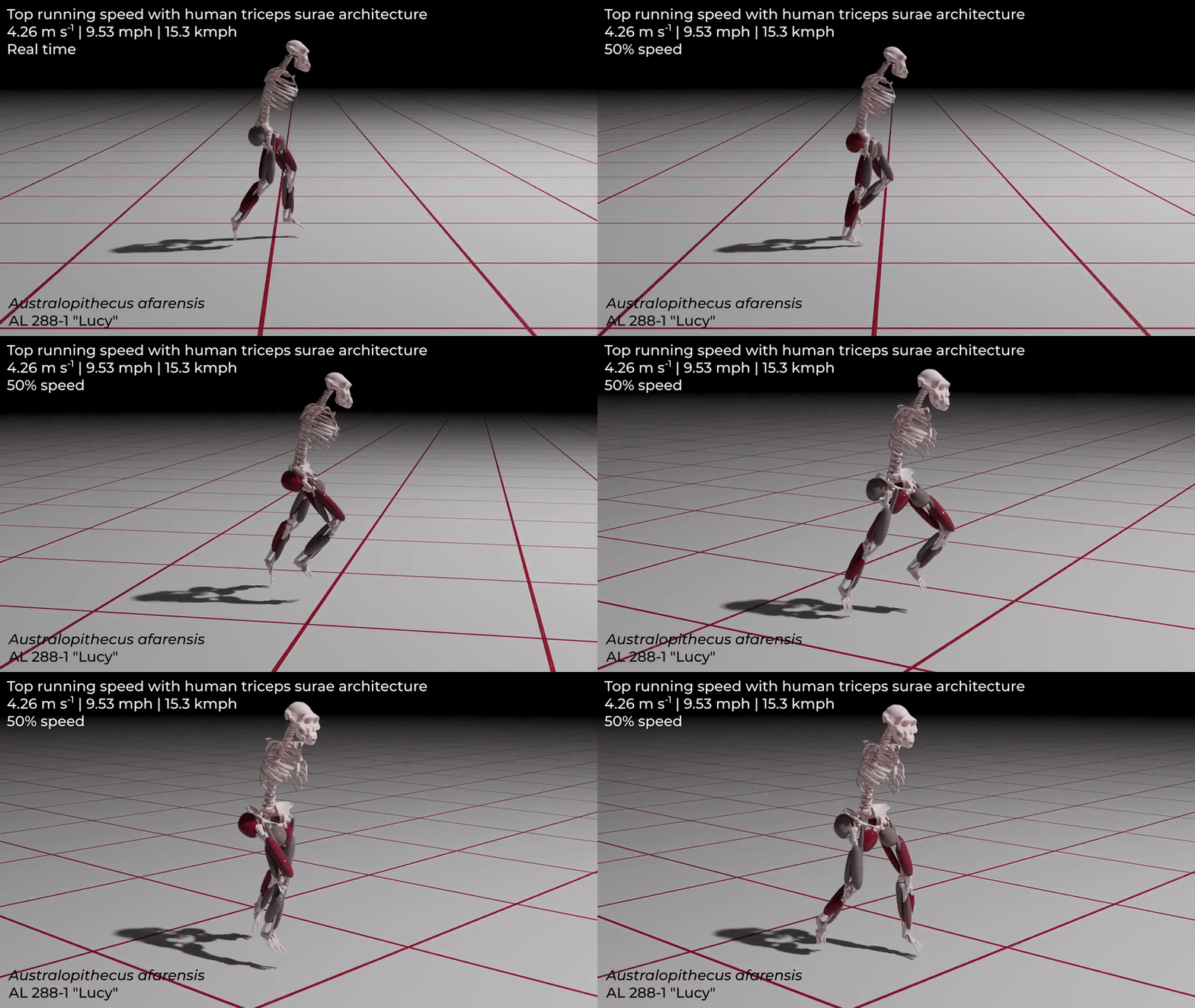
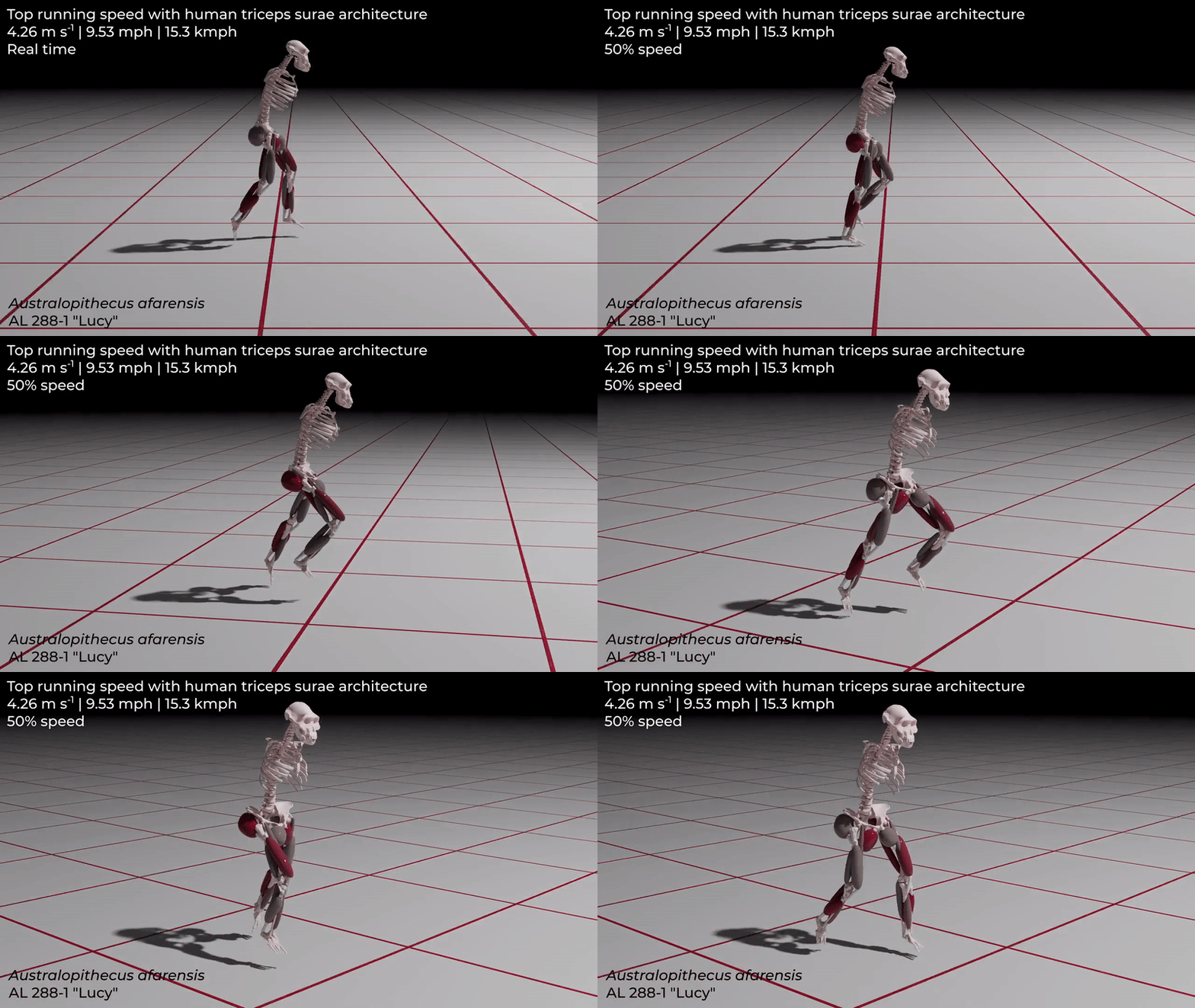
"Lucy," our 3.2 million-year-old hominin relative, couldn't run very fast, according to a new study. But modeling her running ability has provided new insights into the evolution of human anatomy key to running performance.
The human ability to walk and run efficiently on two feet arose around 2 million years ago with our Homo erectus ancestors. But our earlier relatives, the australopithecines, were also bipedal around 4 million years ago. Given the long arms and different body proportions of species like Australopithecus afarensis, though, researchers have assumed that australopithecines were less capable of walking on two legs than modern humans.
In a study published online Dec. 18 in the journal Current Biology, a team of researchers modeled the skeletal and muscular anatomy of Lucy to determine her maximum running speed, the energetic costs associated with running, and her running endurance.
Through a series of simulations of running gait, the researchers wrote in their study that Lucy's "maximum running speed was considerably lower than our human model," topping out around 11 mph (18 km/h). For reference, Usain Bolt's top speed is more than 27 mph (43 km/h) and a recreational runner's top sprinting speed is about 13.5 mph (22 km/h). Additionally, in spite of this lower top speed, Lucy used up between 1.7 and 2.9 times more energy than modern humans do to run that fast, suggesting she would have required significantly more energy to travel a given distance than a modern human would.
Australopithecines like Lucy had large upper bodies, long arms and short legs, which likely limited their running speed. But the researchers discovered that another potential reason for Lucy's slow, inefficient running may have been a differently shaped Achilles tendon and triceps surae, a group of muscles in the calf.
Related: Lucy's last day: What the iconic fossil reveals about our ancient ancestor's last hours
Modern humans have a long, spring-like Achilles tendon, the researchers noted, which connects calf and ankle muscles to the heel bone. This anatomical arrangement provides humans with the powerful and efficient ankle crucial to high running performance.
When the researchers modeled Lucy's movement with human-like Achilles and calf muscles, she was still slower, but the differences in this tweaked running ability were mostly due to her smaller body size.
"This wider context therefore emphasizes the crucial role of the Achilles tendon and triceps surae architecture in the evolution of hominin running energetics," the researchers wrote in the study. "Key features in the human body plan evolved specifically for improved running performance."
The new study is the first time researchers have directly estimated running ability in Lucy's species using musculoskeletal modeling, the researchers noted, but further work is needed, such as models that include arm swing and torso rotations to more fully understand the differences between australopithecine and human locomotion.