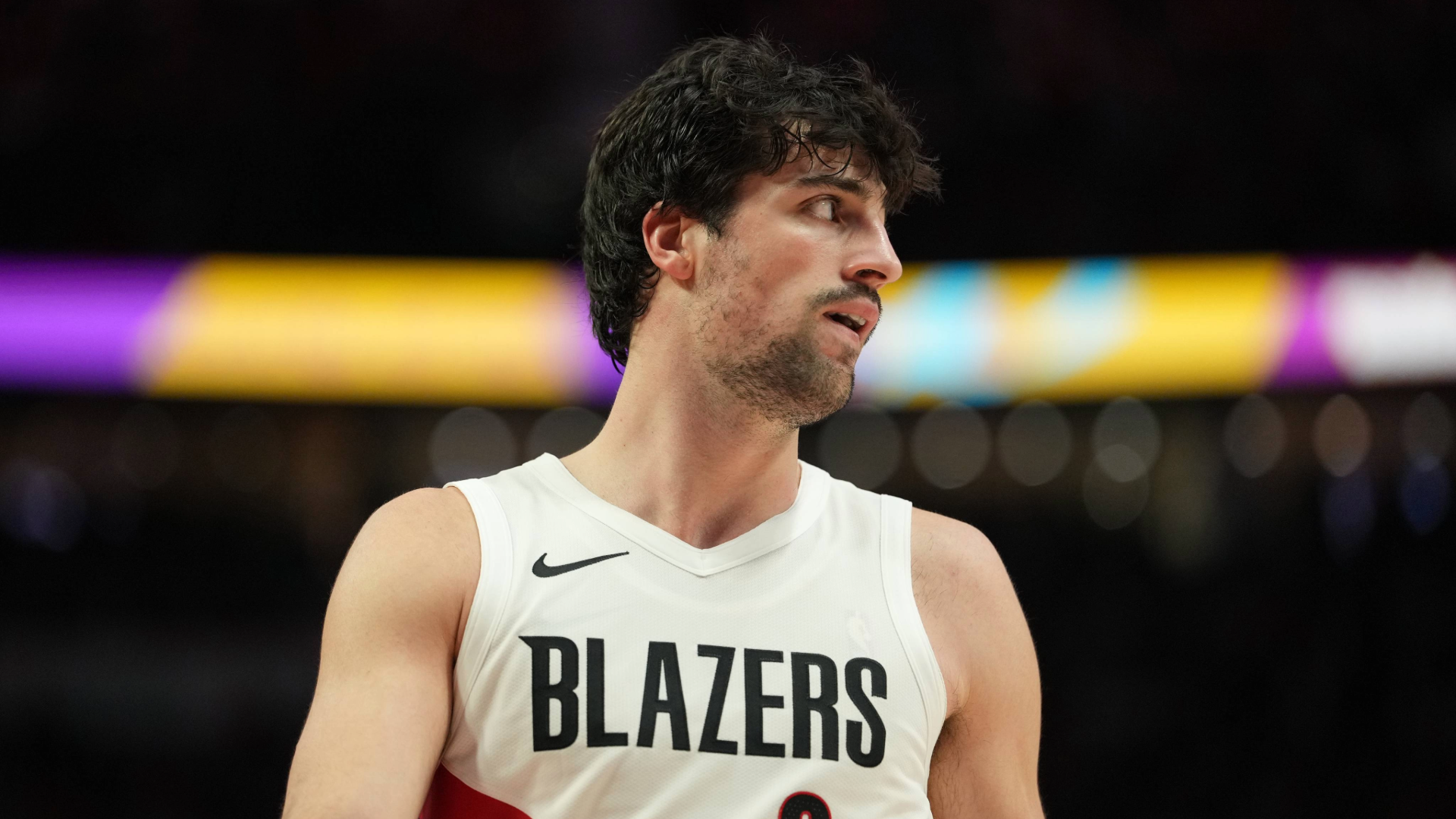
The Portland Trail Blazers are about as well-positioned for long-term success as they've been since they lost the 2019 Western Conference finals. There's clarity at the top of the roster: Deni Avdija is a 25-year-old All-Star and a capable postseason performer. There's upside from their past few drafts, as recent lottery picks Scoot Henderson and Donovan Clingan flashed real talent down the stretch. There's hope in their upcoming drafts, as they control Milwaukee's first-round picks between 2028 and 2030, and they didn't even really pay much of a price to get control of those picks because Damian Lillard, the player they traded to get them, is back on their team.
They weren't ready to compete with a heavyweight like the San Antonio Spurs, who eliminated them Tuesday in Game 5 of the first round of the playoffs, but the outline is here. The Blazers spent the past three years building very intentionally to this point. They're not a title contender yet, but they have the youth, the assets and the flexibility to get there in the foreseeable future. They just have to manage the next few transaction cycles properly.
This is where our concern arises, since we don't exactly know who will be managing those transaction cycles.
How will Tom Dundon's ownership affect the team's future?
The NBA officially approved Tom Dundon's purchase of the Trail Blazers on April 6. It's been a bit more than three weeks and tales of his frugality have already spread far and wide. They've been detailed well here by our John Gonzalez, and while some are relatively harmless (like the lack of free T-shirts at home playoff games), others are potentially problematic. Reports that he wants to pay his next head coach between $1 million and $1.5 million, for example, fly in the face of an industry in which even first-timers typically make more than twice that. Speaking of breaking industry norms, this search has been conducted while Tiago Splitter has been actively coaching the team.
Dundon could potentially escape industry scorn on the basis of Splitter's interim status, but The Athletic noted that Dundon has also sought general manager candidates. Joe Cronin is not an interim general manager and, considering his acquisition of all of those young players and draft picks, is probably the single person most responsible for Portland's promising outlook.
In a vacuum, it is reasonable to believe that Portland could improve in either role. In practice, it doesn't seem especially likely that they'll do so with these self-imposed financial restrictions, and that raises further questions about how much the team is prepared to spend on basketball infrastructure. What sort of assistant coaches will they be able to hire? How big will their analytics and scouting staffs be? The NBA caps player salaries and no other form of spending. The smartest teams spend millions seeking every remote advantage.
Think about the Lakers for a moment. For years under the Buss family, they were thought of as "a family business." They'd spend money on players and coaches, but were considered thrifty in other ways. Then Mark Walter bought the team, and the prevailing opinion around the sport has been that it made them substantially more dangerous. Walter's Dodgers are known for aggressive spending in just about every area that affects the on-field product, and his NBA team has already begun the process of overhauling its scouting department. The Lakers had institutional advantages that allowed them to get away with spending less. The Blazers don't play in Los Angeles.
What would new leadership mean for the incumbent players? Portland has quite a few substantial financial decisions to make over the next few offseasons. Henderson, for instance, is eligible for a rookie extension this summer. His first two years were disappointing. He missed most of his third season. He flashed stardom at the end of this season. Measuring his worth is going to be tricky. It will also directly affect Avdija, whose situation is a bit more complicated.
Deni Avdija's contract situation could complicate things
Avdija will technically be eligible for a contract extension next summer. Functionally, the Blazers won't be able to give him one without further moves. His current deal is so far below market value that the 140% raise he's allowed by the CBA simply won't cut it. Portland would have to clear out actual cap space to renegotiate and extend his contract next offseason.
Paying Henderson makes that harder, perhaps even impossible, depending on what else the Blazers do. One would imagine Cronin has a plan to address the situation or, failing that, enough of a relationship with Avdija and his representatives after helping turn him into an All-Star that they'd be able to go into 2028 free agency with a layer of trust.
Would that evaporate with new leadership in place? We can't know for sure, but Portland's financial advantage in free agency is minimal. If he isn't renegotiated and extended in 2027, he effectively needs to be recruited internally in 2028. Players are focused on their own salary first and foremost, of course, but when there's a market full of teams eager to pay you, you have a bit more room to consider the state of the teams that might employ you. We don't know if the Blazers will pay what it takes to maintain a top-notch organization. We know other teams already do.
Portland has a viable path to winning
There's no point in gaming out Portland's 2026 offseason at this stage, no hypothetical trades to consider or free agents to pursue, because we just don't know who's going to be making these decisions beyond Dundon and what that person's priorities will be.
The Blazers might trade for a star this offseason. They might stay the course. They might make a drastic and completely unforeseeable directional shift.
There's a path to sustainable winning here, but it's precarious. They're not the Spurs team that just beat them. Their asset advantage and lottery luck have not been so overwhelming that future championship contention is close to a guarantee. They've laid a strong foundation that will need to be maintained and expanded in the years to come, and until we know who will be guiding that process, there's no way to know where it might go.