

If there is a plant worthy of the name ‘resurrection plant,’ it’s definitely Selaginella lepidophylla. In fact, its miraculous resurrection mechanism is so impressive that it was once used by Spanish missionaries to explain the concept of being reborn to the native population of the Americas and convince them to convert to Christianity. Even today, seeing a brown, shrivelled plant come back to life in mere hours after being sprayed with water is quite a sight, but centuries ago, it was nothing short of a miracle.
S. lepidophylla is renowned for its ability to survive extreme desiccation in Mexico’s Chihuahuan Desert, sometimes for several years, only to resume normal metabolic activity upon rehydration. In the absence of water, the resurrection plant begins to curl inward into a ball-like structure, losing up to 95% of its water content. Its leaves become leathery brown, and the plant itself looks dead to the naked eye. But all it needs is a few drops of water.
Within hours of being exposed to moisture, S. lepidophylla begins to unfurl, eventually regaining its vibrant green color and resuming the photosynthesis process. Often described as a botanical marvel, the resurrecting plant can come back to life after years of hibernation, during which time all its metabolic processes are reduced to a minimum.
The key to the resurrection plant’s remarkable resilience is its ability to synthesize trehalose and betains, two specific compounds that are vital to its survival. Trehalose is a crystallized sugar that replaces water in the plant’s tissue and protects it from damage caused by the build-up of salt. Betaines play a similar role, increasing the plant’s resistance in times of extreme drought.
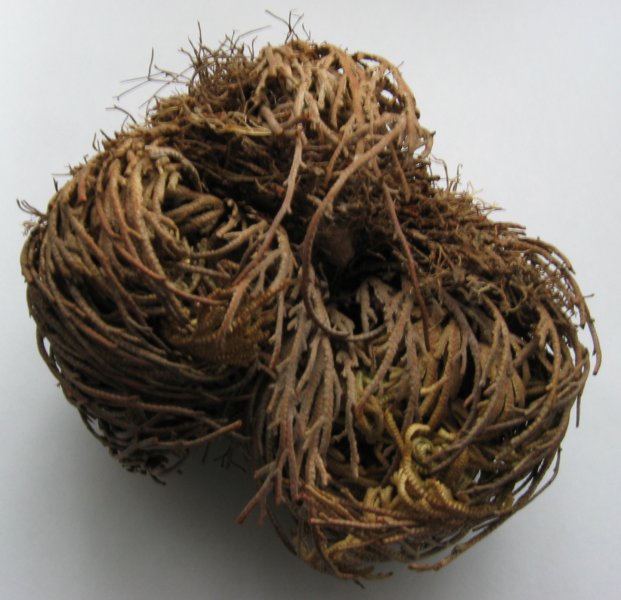
As if resurrection weren’t a cool enough survival mechanism, Selaginella lepidophylla can also detach from its roots if the extreme drought persists. This allows it to be carried by the wind, hopefully to a more hospitable place where it can take root once more and continue growing.
It’s important to point out that the resurrection plant is not immortal. Its ability to resist the effects of extreme drought diminishes over time, and after dozens of resurrection cycles, the plant dies. Likewise, if dehydration happens too fast, and the plant doesn’t have enough time to prepare for hibernation, it can die.
For more botanical wonders, check out the world’s most resilient plant, and the world’s largest plant.