
The Dallas Mavericks created one of the most desirable head coaching openings in recent NBA history when they moved on from Jason Kidd in May. The chance to coach young phenom Cooper Flagg theoretically gave them access to almost any candidate that they wanted, and sure enough, new Mavericks president of basketball operations Masai Ujiri went fishing for a whale.
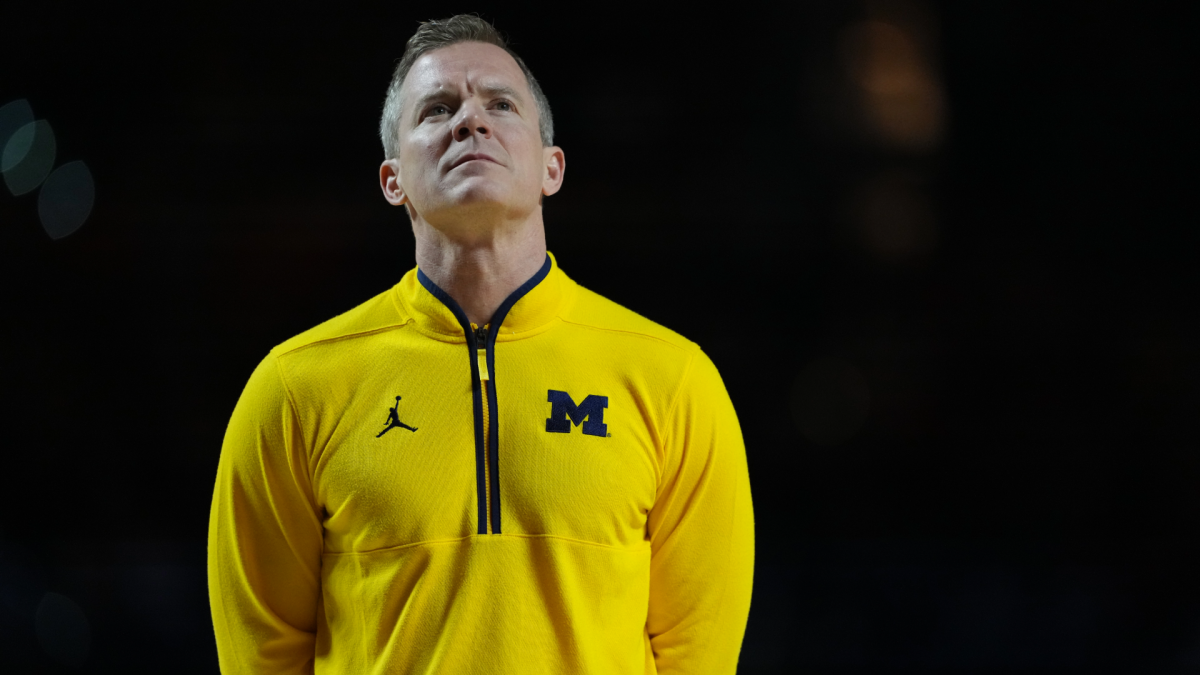
On Monday, he landed that whale: the Mavericks are hiring reigning national champion Dusty May away from the Michigan Wolverines to be their head coach. He is the first head coach to make the leap from college to the NBA since, ironically enough, another former Michigan coach, John Beilein, did the same to join the Cleveland Cavaliers in 2019.
Dallas was already one of the more interesting teams of the 2026 offseason. They're built around Flagg, who is 20, but most of the supporting cast was originally designed around the older Luka Dončić. Does hiring May, a college coach, suggest that they're about to lean into a youth movement? Let's look at three of the biggest questions in Dallas following his hiring.
So... are the Mavericks drafting a Michigan Wolverine?
This is the obvious question floating around the May hire. Dallas holds the No. 9 overall pick in Tuesday's first round. Three of May's former Wolverines are roughly projected to fall in that range of the draft: Aday Mara, Yaxel Lendeborg and Morez Johnson. So... is May going to bring someone from Michigan with him to Dallas?
Ujiri is a championship-winning executive. He's not ceding control over this pick to a first-time coach on his first day on the job. If Dallas stays at No. 9, the Mavericks are not going to deviate from whatever plans they have formed during the draft process. The Mavericks have been linked most prominently to Arizona guard Brayden Burries, whom May faced in the Final Four during his championship run. Before that game, he praised both Burries and fellow Wildcats freshman Koa Peat for their Team USA experience, which he viewed as a prerequisite to early college success.
Things start to get more interesting if one of two things happens. If Burries is taken before No. 9, the Mavericks would have to look elsewhere. In the top eight, he has most prominently been linked to the Los Angeles Clippers. The other possibility would be trading down.
The Thunder, holders of the No. 12 and No. 17 picks, make a lot of sense as a trade partner. They have a surplus of draft assets and might need to jump ahead of the Bucks and Warriors for a specific target. The Mavericks don't control their own first-round pick again until 2031, so volume makes sense if there's someone they like at No. 12. Considering three of May's Wolverines are on the board, there is a good chance there will be.
Would a Michigan prospect lead to further trades?
There's a subtle question guiding a lot of what the Mavericks are doing this offseason: How healthy is Dereck Lively? He looked like a potential star in 2024, as the Mavericks made their surprising run to the NBA Finals. He hasn't been the same since his rookie year, playing only 36 games in the 2024-25 season and seven last year. He's up for a rookie extension. How eager the Mavericks are to pay him will likely tell us quite a bit. The possibility of a Daniel Gafford trade also lingers here.
The Mavericks wouldn't necessarily have to trade Gafford or Lively if they took Mara. They could play out the year with all three of them, minimizing everyone's minutes and keeping them healthy while they make a long-term plan. But drafting Mara obviously creates a bit of a center logjam, and there would presumably be trade interest in either Gafford or Lively. If nothing else, Dončić's new team, the Lakers, would presumably be happy to have either of them.
Johnson will likely play some center in the NBA, but can also play forward. If he is a Maverick, the obvious trade candidate becomes P.J. Washington, a versatile, veteran forward with an inconsistent jumper. As Johnson's jumper is a long way off and Dallas doesn't have a center who can space the floor, the two of them would be an awkward fit. The same is potentially true of Naji Marshall. Keeping Klay Thompson, in that world, makes sense. The Mavericks have minimal shooting.
Lendeborg can seemingly play with anyone. He's power forward-sized but can defend the entire positional spectrum and developed a reliable jumper by the end of his college career. He doesn't necessitate any further moves, but in general, the Dallas youth movement makes most of the older players expendable. How many of these Dončić-centric acquisitions really fit onto Flagg's new timeline? That's what the Mavericks have to figure out with virtually every veteran on the team, including their most famous one.
Is Kyrie Irving about to get traded?
All of the reporting thus far suggests that Dallas is not eager to move Irving. In general, I tend to approach that notion with skepticism. Mark Cuban was adamant in November that Dallas wouldn't trade Anthony Davis. Well, Davis now plays for the Wizards. When Ujiri was in Toronto, he reportedly indicated to DeMar DeRozan that he would not be traded before flipping him for Kawhi Leonard in what Ujiri would later describe as a "miscommunication."
Trading prominent players is tricky. Teams do everything in their power to minimize such rumors for fear of creating problems in their locker rooms. But teams are ultimately ruthless about these things. They are entirely self-interested. If Ujiri believes trading Kyrie Irving is in the best long-term interests of the Dallas Mavericks, he will trade him.
The question at this point has more to do with timing than anything else. Irving is 34 and coming off a torn ACL. Does it make more sense to move him now, while his value is probably well below where it would have been before his injury? Or should Dallas let him play for a few months and try to re-establish his trade value? The answer depends on what sort of offers the Mavericks are getting.
Flagg was four years old when Irving got drafted. They are fundamentally on different timelines. Flagg might be able to benefit from Irving's presence in the short-term, but given the asset deficit Dallas is operating under, that benefit pales in comparison to what a trade could do for their longer-term outlook. Hiring a college coach is just the cherry on top here. It seems as though Dallas is leaning into a true rebuild around Flagg, and expensive 34-year-olds coming off torn ACLs tend not to fit into rebuilds.