Both parties found exactly what they needed and made subtractions from an area of strength

• 10 min read
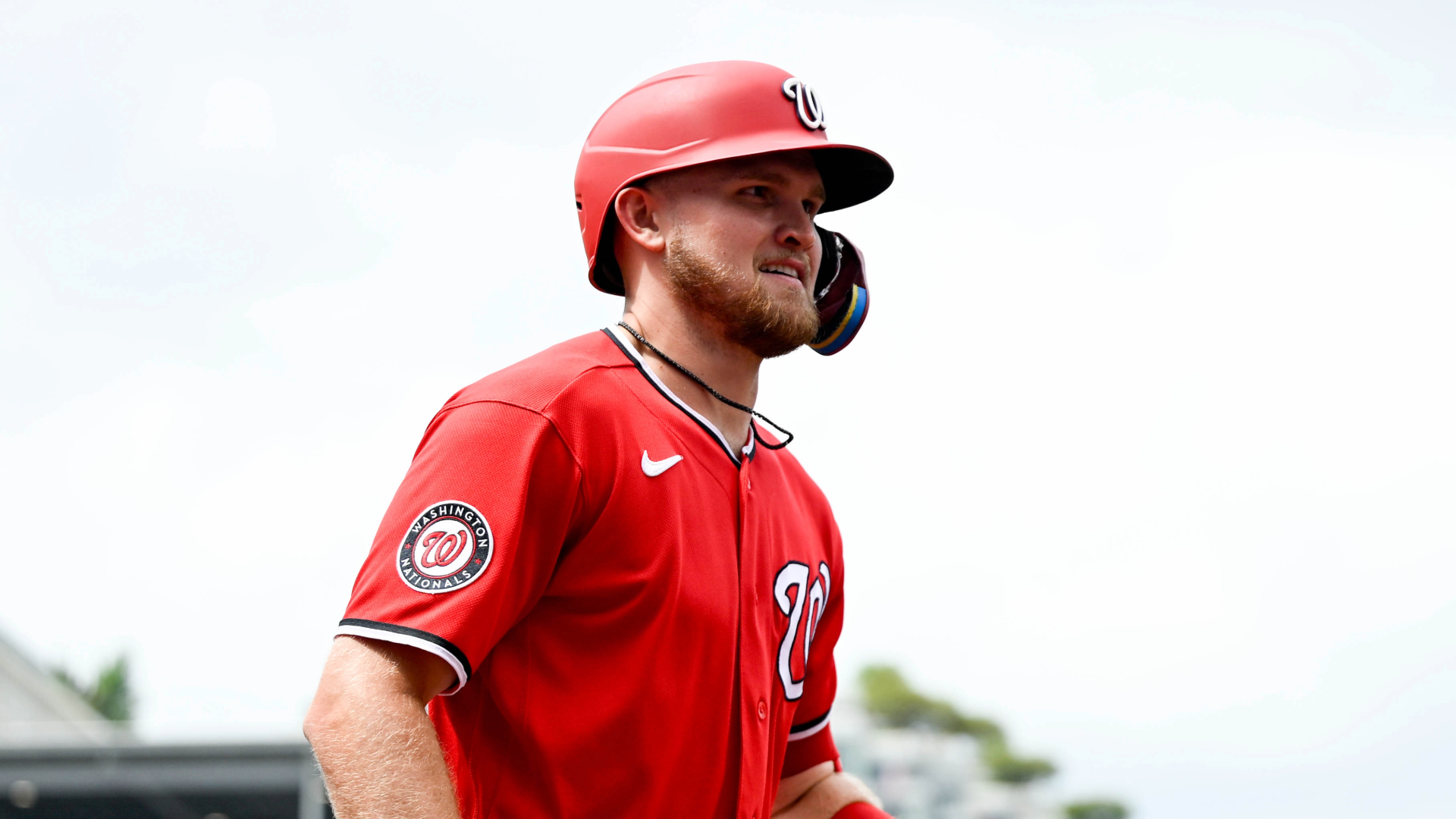
The 2026 MLB trade deadline is 6 p.m. ET on Monday, Aug. 3, this summer and the activity will pick up in the coming days, though the true blockbusters figure to come right at the wire. Late Saturday night, the Boston Red Sox and Washington Nationals opened the trade season with an old-school young-player-for-young-player challenge trade.
Here is the full trade, which has been announced by teams and is official:
- Red Sox receive: 1B/3B Curtis Mead, RHB (under team control through 2030)
- Nationals receive: SP Connelly Early, LHP (under team control through 2031)
The up-and-coming Nationals have hovered around .500 the last few weeks and are reportedly planning to buy and sell at the deadline. This trade fits that strategy. They have baseball's highest-scoring offense by an incredible 0.28 runs per game and sacrificed a bat to improve a pitching staff that has allowed the third-most runs per game.
The Red Sox are on the opposite end of the spectrum. They've allowed the fourth-fewest runs per game but have scored the eighth fewest, so they traded an arm for a bat. Boston's recent 15-game winning streak has pushed them into the wild-card (and AL East) mix and another bat, particularly a right-handed hitter, was a must.
Here is our breakdown and grades for the first notable trade of this year's deadline.

Boston Red Sox: B
Red Sox add desperately needed length to their lineup, defense be damned.
This trade makes one thing clear: offense will be expensive at the deadline. The Red Sox will be Mead's fourth team in the last calendar year and it wasn't until he joined the Nationals in March that he began to live up to the potential he showed as a prospect. Still only 25, Mead is hitting .254/.352/.500 with 17 home runs and excellent strikeout (19.0%) and walk (11.9%) rates. He has punished lefties (.897 OPS), something the Red Sox desperately need given their lefty-heavy lineup.
Prior to this season, Mead was a career .238/.300/.317 hitter in 488 plate appearances spread across 2023-25. His breakout this season can be attributed to two things. One, the Chicago White Sox changed his setup at the plate during his time in the organization, specifically getting him to lower his hands and stand more upright, which keeps his swing in sync. And two, Washington's next-level game-planning, which is tailored for each hitter against the upcoming pitcher. From the Baltimore Banner:
"Placing my hands lower ideally makes my swing a little bit shorter and more direct," Mead said. "I can meet the contact out in front a little bit easier when a guy's throwing harder and ideally a little bit more consistently too."
...
Mead said, in the hitters meetings, the coaches discuss pitch shapes, release height and how the pitcher they're facing has sequenced his pitches. Having that information allows him to go into at-bats with a clear mind and approach.
"The hitting coaches have been helping me be more convicted in knowing what [pitch] I'm gonna get and making sure that, when I get the pitch I'm looking for, I don't miss it," Mead said.
That has helped Mead cut his strikeout rate from 23.4% over the last three years to 19.0% this year, up his walk rate from 5.7% to 11.9%, and cut his whiff rate (i.e. misses per swing) from 22.4% to 17.8.%. The MLB average whiff rate is 25.2%, so Mead went from better than average to truly great. Fifty-one players have hit at least 17 home runs this season. Only seven have a lower strikeout rate than Mead. He's become the power/contact guy he was projected to be as a prospect.
Furthermore, Mead's rate of pulled fly balls has jumped from 16.4% (league average) over the last three years to 22.0% this year, which has fueled his power spike. Pulled fly balls are the best possible contact. The league averages on pulled fly balls this season are a .588 batting average and 1.328 slugging percentage. As a right-handed batter, Mead's pulled fly ball approach makes him a terrific fit for Fenway Park. He's going to wear out the Green Monster with doubles when he's not hitting the ball over it.
The downside with Mead is his third base defense, which has improved this season, but is still more "you can live with it" than "he'll save your pitchers a bunch of outs." The Red Sox could put Mead at DH, though Masataka Yoshida has been one of their more reliable hitters this season. Their best possible lineup includes Mead and Yoshida, not one or the other. It's likely Mead will play third base and Caleb Durbin will shift to second base, the position he played in the minors.
"I came into this year willing to be wherever they need me, and that hasn't changed. Wherever they need me to play, I'll play there," Durbin told the Boston Globe recently about possibly playing second base. "I'm sure they would have my input on that too, and it would ideally be a collaborative thing. But I also trust whatever they think is best."
We'll see how interim manager Chad Tracy fills out his lineup card once Mead joins the team, but figure it will look something like this:
- CF Ceddanne Rafaela, RHB
- RF Wilyer Abreu, LHB
- 1B Willson Contreras, RHB
- DH Masataka Yoshida, LHB
- 3B Curtis Mead, RHB
- LF Jarren Duran, LHB
- 2B Caleb Durbin, RHB
- SS Andruw Monasterio, RHB
- C Connor Wong, RHB
The Red Sox could still use a shortstop (Trevor Story is out following hernia surgery and wasn't productive when he did play) but Mead adds badly needed length to the lineup. Too many nights, Boston's lineup completely fell off after the No. 4 or 5 lineup spot. For all intents and purposes, it's been a three-man army: Rafaela, Abreu, and Contreras. Now add Mead to the mix.
Mead came at a heavy price, albeit one the Red Sox can afford given their rotation depth. Early, 24, was one of the game's biggest breakout pitching prospects a year ago, so much so that he started the win-or-go-home Game 3 of the Wild Card Series at Yankee Stadium. Before going down with elbow inflammation, Early pitched to a 3.44 ERA in 17 starts and 91 ⅔ innings this year, and was positioning himself to start another postseason game. As things stand, Boston's rotation depth chart looks like this:
LHP Garrett Crochet(out with shoulder inflammation)- RHP Sonny Gray
LHP Ranger Suárez(will return from groin strain Sunday)- LHP Payton Tolle
- LHP Jake Bennett
RHP Johan Oviedo(out with flexor strain)- LHP Patrick Sandoval
- LHP Eduardo Rivera
- RHP Brayan Bello (more of a long reliever now)
The emergence of Bennett, who came over in a similar young player for young player trade with the Nationals in January, helped make Early expendable. Also, that's a lot of left-handed pitchers. So much so that it could have created matchup headaches in the postseason. The Red Sox could afford to trade a lefty starter and Early is the one they chose to trade. It's understandable given the fact that a) he's currently on the injured list, and b) the under-the-hood numbers aren't quite as shiny as his 3.44 ERA.
As well as Mead addresses the offense's needs, the Red Sox get a B for this trade rather than an A because they sold low on Early and bought high on Mead, a player who was waiver bait not too long ago. Credit chief baseball officer Craig Breslow for being aggressive and paying the (steep) price to get his suddenly in contention team the help it needs. You can't help but wonder, though, was Mead really the best possible 1-for-1 return for Early?

Washington Nationals: A
Nationals nail upgrade from low-cost pickup to quality young starter.
What a tidy piece of business for Washington's new front office. Mead was designated for assignment by the White Sox at the end of spring training because he did not make their Opening Day roster. Three days later, he was traded to the Nationals for catcher Boston Smith, who did not rank among Washington's top 30 prospects at the time of the trade. Four months later, the Nationals flipped Mead for Early, one of the brightest young pitchers in the game.
Just to recap this sequence:
- March 28: Acquired Mead for last year's sixth-round pick
- March 31 to July 25: Mead puts up an .852 OPS and 1.5 WAR
- July 25: Traded Mead for Baseball America's No. 56 overall prospect entering 2026
That is really incredible work by Nationals president of baseball operations Paul Toboni and assistant GM Devin Pearson, both of whom came over from the Red Sox. Mead was essentially found money. He was a low-cost pickup (Baseball America still does not rank Smith among Chicago's top 30 prospects in their July update) who they leveled up and then turned into a quality young starter. It's almost like a video game move, right? You're not supposed to turn waiver bait into a good young pitcher in four months.
Pearson was Boston's amateur scouting director when the club drafted Early in 2023. This is a pitcher he and Toboni are not only familiar with, but played a role in helping him make the leap from fifth-round pick to high-end pitching prospect. What makes Early unique is that he is not a blow-you-away pitcher. He's a six-pitch pitcher who throws all six pitches between 8% and 35% of the time, and throws at least different pitches regularly to lefties and righties. Here is this year's pitch usage:
| Overall | vs. RHB | vs. LHB | |
|---|---|---|---|
Four-seam fastball | 35% | 37% | 29% |
Sinker | 20% | 15% | 34% |
Changeup | 18% | 18% | 3% |
Curveball | 11% | 14% | 2% |
Slider | 8% | 8% | 8% |
Sweeper | 8% | 2% | 24% |
To be clear, Early is not a soft-tosser. His four-seamer has sat 94.0 mph this year and topped out at 97.4 mph. There's plenty in the tank to keep hitters honest. Also, the slider and sweeper are distinct pitches. The slider sits 87 mph and is almost a cutter with short, tight break. The sweeper is a softer pitch in the 82 mph range with big horizontal break across the plate. A rookie pitcher throwing six pitches regularly and commanding them well enough to run a league average 8.7% walk rate is awfully impressive.
That isn't to say this trade is without risk or is a slam-dunk win for Washington. First and foremost, Early has been on the injured list with elbow inflammation since July 1. He threw his first bullpen session last week, so he's recovering well and is progressing with his rehab work, but he's still weeks away from joining Washington's rotation. Tests showed Early's UCL is intact (the inflammation is said to be at the back of his elbow, not on the inside), but still, elbow trouble is never good.
Secondly, Early's under-the-hood performance doesn't align with the 3.44 ERA. His 4.61 FIP reflects his trouble keeping the ball in the park (1.47 HR/9) and his 4.32 expected ERA reflects his issues limiting hard contact. Early's 10.6% barrel rate is 12th highest among the 93 pitchers with at least 90 innings. Pitchers can have success despite allowing a lot of barrels (Logan Gilbert is at 10.5%), but it can be a difficult needle to thread, and Early is still learning how to thread it.
With CJ Abrams and James Wood anchoring the lineup, plus a strong farm system that includes 2025 No. 1 overall draft pick Eli Willits, the Nationals have a very strong offensive core and foundation. They need a lot -- A LOT -- of help on the pitching side though. The club's rotation depth chart currently looks like this:
- RHP Cade Cavalli
- LHP Foster Griffin (free agent after 2026)
LHP Connelly Early(out with elbow inflammation)RHP Jake Irvin(out with shoulder strain)RHP Josiah Gray(out with flexor strain)LHP DJ Herz(out with Tommy John surgery)- LHP Andrew Alvarez
- RHP Zack Littell (free agent after 2026)
- RHP Miles Mikolas (free agent after 2026)
RHP Trevor Williams(out with internal brace surgery)
The Nationals regularly use openers and bullpen games, not because they want to but because they have to. Given what Littell and Mikolas are at this point in their careers, Washington simply does not have five major league-caliber starters. Unless they plan to spend big on arms in free agency (unlikely), developing their own starters and trading bats for arms is how Toboni & Co. will build out their rotation moving forward. Swapping Mead for Early is the first significant step in that direction.
Despite the health/hard contact risks with Early, this trade is an easy A for the Nationals. Trading Mead for Early would have been unthinkable even four months ago. Grabbing Mead off the scrap heap, coaching him up into a middle-of-the-lineup hitter, and flipping him for a talented and controllable young starter is a great series of moves that puts the team in better position long-term. Washington's postseason chances have taken a hit, sure, but their long-term outlook is much improved.