
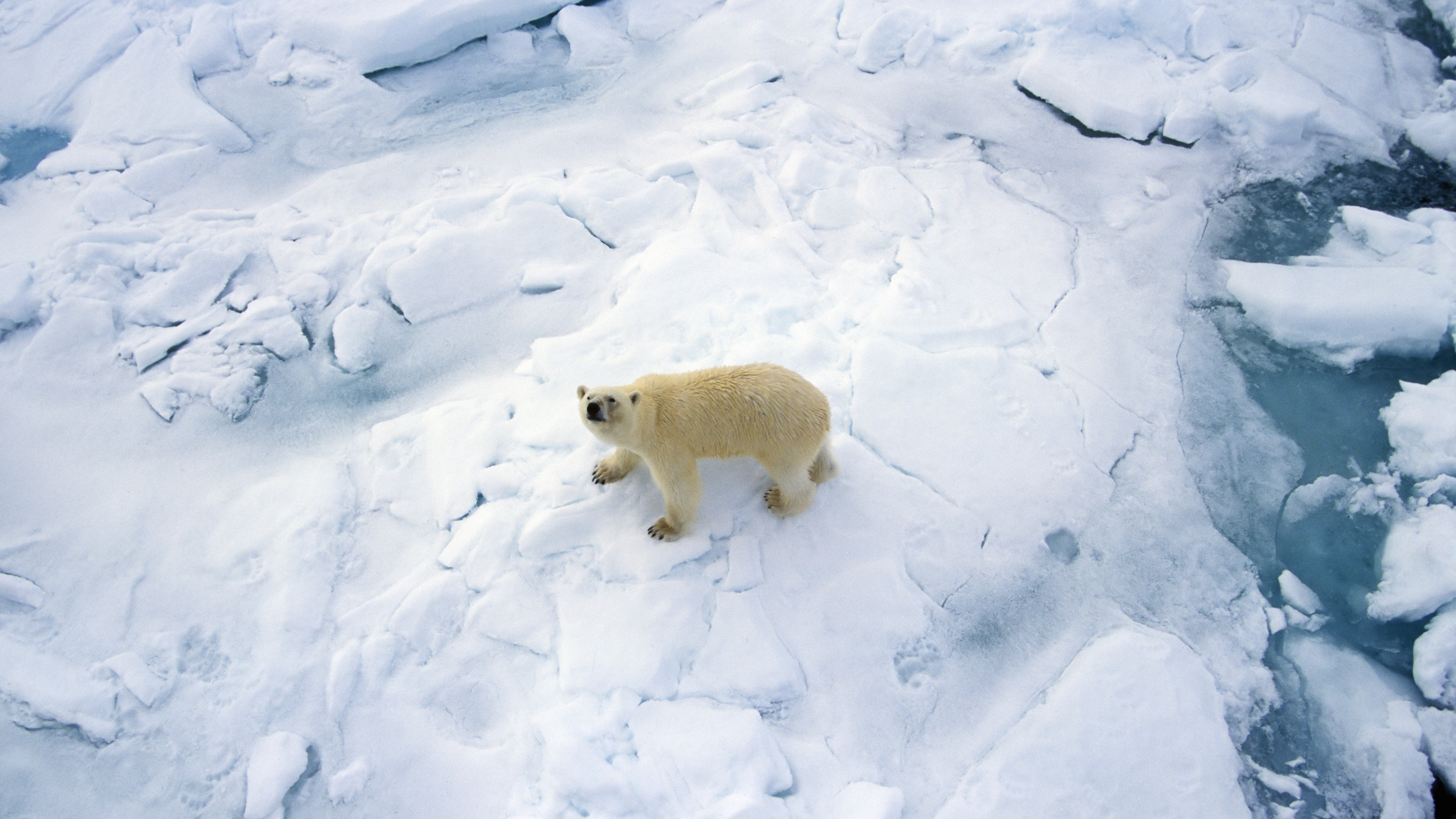
Winter sea ice cover has dropped to its lowest maximum on record as temperatures continue to exceed 2.7 degrees Fahrenheit (1.5 degrees Celsius), new data reveals.
In 2015, world leaders signed the Paris Agreement, an international treaty that promised to limit global warming to preferably below 2.7 F and well below 3.6 F (2 C). Earth is now consistently above that target, with March representing the 20th out of the last 21 months to breach the preferred limit.
Arctic sea ice cover varies throughout the year and usually reaches its maximum extent in March. The European Union's Copernicus Climate Change Service has now shown that the maximum cover for 2025 was the lowest ever. This update echoes a recent NASA report on sea ice cover and highlights a worrying upward trend in global temperatures.
The data shows that sea ice cover was 6% lower than average this year, making it the lowest monthly extent for March in the 47-year history measured by the satellite record. The Climate Change Service also found that March's global temperatures were on average 2.88 F (1.6 C) warmer than preindustrial levels (estimated for between 1850 and 1900), according to a Copernicus statement.
Declining sea ice threatens human and wildlife communities that depend on the ice to survive. The decline also has a variety of adverse environmental impacts and accelerates global warming driven by human activities. This is because liquid water reflects less sunlight than ice, so as sea ice is lost, more of the ocean beneath is exposed and the planet absorbs more heat.
On March 22, NASA and the National Snow and Ice Data Center revealed that Arctic sea ice had reached its maximum extent for 2025. The sea ice cover was 5.53 million square miles (14.33 million square kilometers), around 30,000 square miles (80,000 square km) less than the previous lowest maximum, set in 2017.

The Copernicus update noted that March also marked the fourth consecutive month that cover had been at a record low for the time of year. Sea ice cover and temperature fluctuate from year to year, so climate change doesn't necessarily mean every new month will be a record breaker. And yet Copernicus’ updates have consistently announced record-breaking months.
For global surface air temperature, 2025 had the second-warmest March on record. That means it was warmer than every March on record except for 2024, which was only narrowly warmer.
At the regional level, temperatures were above average over the United States — but not record-breaking — while Europe had the warmest March since records began. Temperatures were above average across Europe and particularly warm over eastern Europe.
Samantha Burgess, the strategic lead for climate at the European Centre for Medium-Range Weather Forecasts, which implements the Copernicus program, said in the statement that "March 2025 was the warmest March for Europe, highlighting once again how temperatures are continuing to break records."