
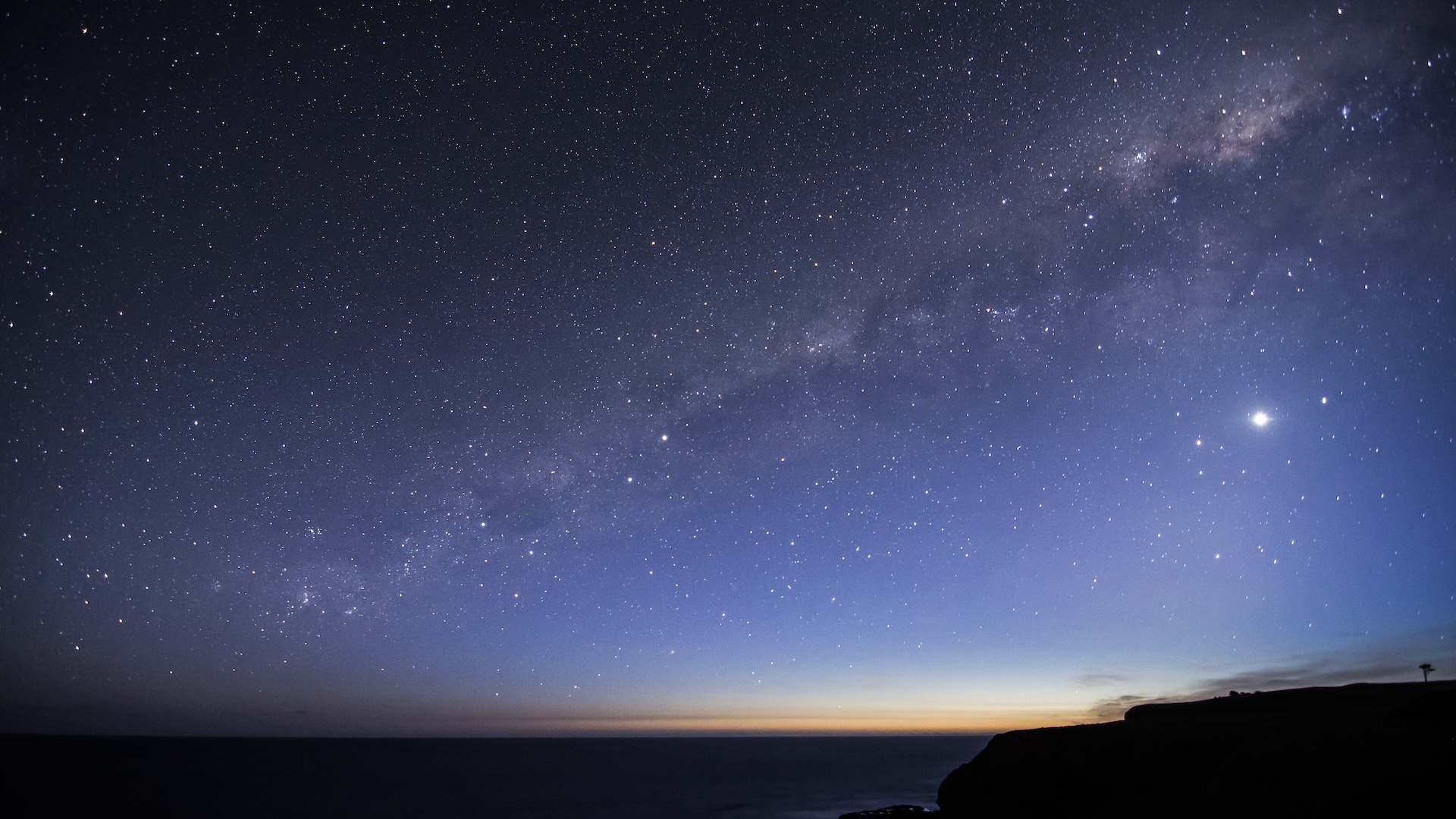
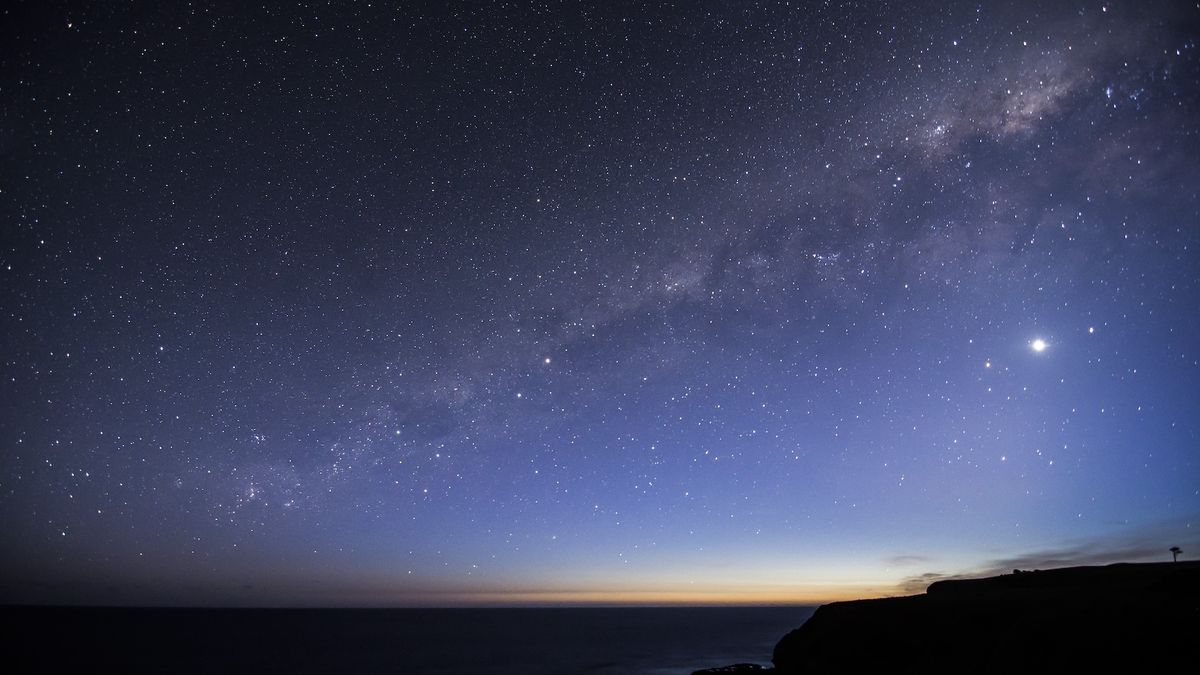
Venus, a planet named after the Roman goddess of love, will fittingly be at its brilliant best on Valentine's Day (Feb. 14) this year.
Currently reigning supreme in the post-sunset night sky, Venus is living up to its nickname as the "evening star." Although it's always the brightest planet in the night sky when visible — second only to the sun and moon in brightness — it reaches a magnitude of -4.9, its greatest brilliance, in mid-February. The planet won't appear this bright in the evening sky again until September 2026, according to EarthSky.
Venus reached its highest point in the evening sky on Jan. 10 and will sink into the sun's glare on March 22, with its brightest evening appearance coming midway between those two extremes.
Related: The 10 best stargazing events of 2025
The visibility and brightness of Venus are the result of where it orbits the sun in the solar system. As the second planet from the sun, Venus always sits interior to Earth and thus has phases similar to the moon's, as seen from our planet. As Venus gets closer to Earth — as it is doing right now — it shrinks to a crescent. Despite being just 27% illuminated on Feb. 14, its close proximity to Earth at the time will give us our brightest view of the planet all year. By March 1, Venus will be just 14% lit — so now is a great time to see Venus through a backyard telescope or pair of good skywatching binoculars.
Venus' remarkable brightness occurs not only because it's getting closer to Earth. It's also relatively large (only a few hundred miles smaller than Earth in diameter), and its cloud layers are highly reflective.
Enjoy the convenient post-sunset views of Venus this Valentine's Day, because from then on, the planet's brightness will wane as it shrinks to an ever-slimmer crescent. Come March, Venus will be tricky to see in the post-sunset sky. After passing through the sun's glare in late March, the planet will emerge into the predawn sky and reach its greatest morning sky brilliance on April 27.